How this guide works
About Hexfield, an Independent Field Guide to Binary Data
Hexfield explains how to read files that were never meant to be read by people: executables, firmware, disk images and the odd blobs found in CTF challenges. This page covers its scope and its working rules.
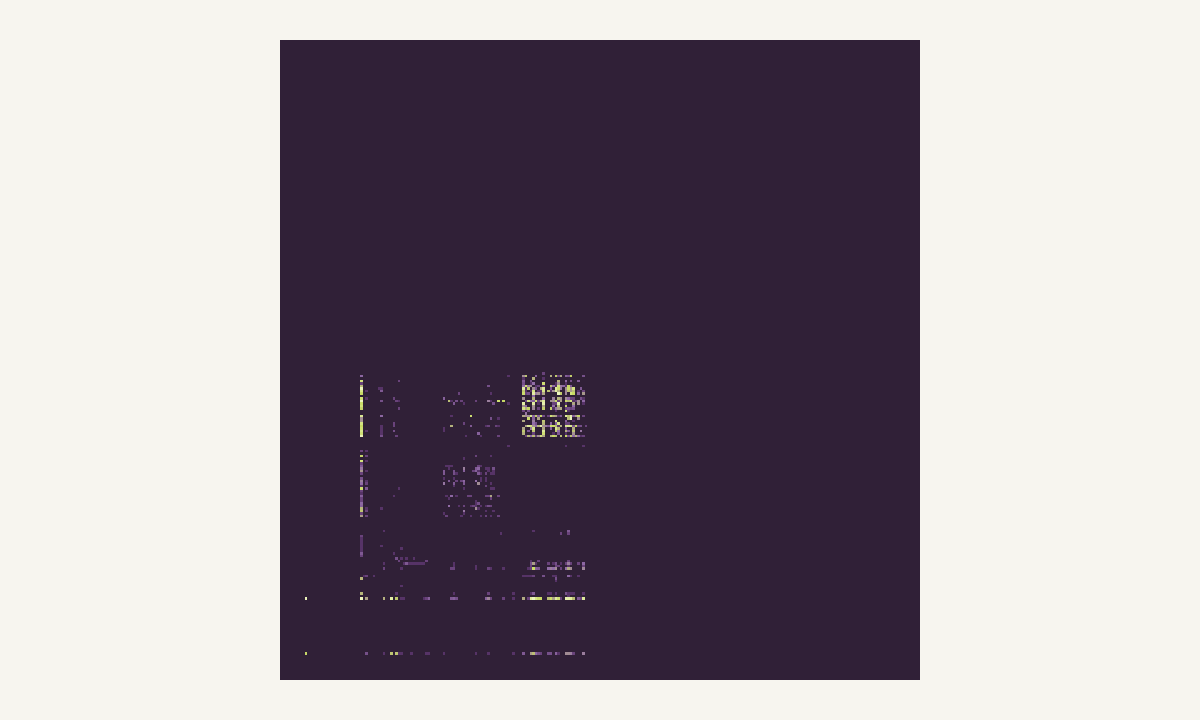
Hexfield is an independent field guide to binary data. It is written for reverse engineers, security students and capture the flag players who spend their time in front of hex dumps and want faster ways to understand what they are looking at. Hexfield is not operated by CodiLime.
What the guide covers
The core of the site is a set of explanations of how to read raw files. The binary data visualization guide shows how bytemaps, entropy plots, histograms, digrams and trigrams turn an unknown file into a picture. A companion page explains exactly how those digram, layered digram and trigram views are built, with real numbers from a GNU Bash 5.2 executable. Another guide covers the old question of whether a random-looking blob is compressed or encrypted, with measured entropy and chi-square values for several algorithms.
The tool pages describe software with verified facts: license, last release, supported platforms, build requirements and limits. The Veles page is the first of these, since that open source viewer is the clearest example of combining a hex editor with 3D statistical views.
The rest of the site is a library of CTF writeups and event guides. Each writeup walks through one challenge from the first look at the files to the working solution, including the wrong turns that a reasonable player would take, and ends with what transfers to other tasks. Event pages give the organizer, the dates, the format and the published top places for one edition of a competition. The CTF team guide explains formats, categories and the CTFtime rating for readers new to the scene.
How pages are written
Every factual claim on Hexfield has to be checkable. Tool facts come from the project’s own repository, release notes and documentation. Event facts come from CTFtime or the organizer’s site. File format details come from the specification or from a byte-level measurement on a named file with a stated version. When a number on a page was measured, the page says what was measured and how, so a reader with the same file can get the same result.
When a fact cannot be confirmed from a primary source, it stays out of the page. That rule removes more text than it adds, but it keeps the guide useful as a reference. Writeups name the intended path where the organizers published one, and mark alternative routes as such.
Code samples are kept short and tested against the version named next to them. Commands use current tool versions where possible, and pages note when an older tool is the only one that shows a particular effect.
Corrections and updates
Binary formats and tools change. Releases ship, repositories go read-only, scoreboards get corrected after an event. When a reader reports an error with a source, the page is checked and fixed in place, and the update date at the top of the page changes with it. Pages about maintained tools are reviewed when a new major release appears, and pages about past events are left alone unless a published fact turns out to be wrong.
Questions readers ask
Can I reuse the figures and code on Hexfield?
Short code snippets on the site are meant to be copied into your own scripts and notebooks. For whole pages or images, link to the page that contains them. Numbers such as entropy values or byte counts can be quoted freely with the name of the file and the version they were measured on, since that context is what makes them reproducible.
Does Hexfield publish flags from live competitions?
No. Writeups cover challenges only after the event has ended, and they give the flag format, not secret flag values. Solutions to tasks from platforms that ask players not to publish answers, such as some permanent training sites, are left out entirely.
How can I report an error?
Point to the page, the sentence and a source that shows the correct value: a specification, a repository file, a release note or an event scoreboard. Corrections that come with a source are checked against it and applied directly, with the date of the change shown on the page.
New to capture the flag? Formats, teams and a first-month plan in one place.
Read the CTF guide